
Period Rescue
Period Emergency Kit: What to Pack Before You Need It
Build a period emergency kit that handles protection, stain treatment, containment, and recovery without overfilling your bag.
Quick answer
What to know
A useful period emergency kit should handle four moments: protection, treatment, containment, and recovery. Pack menstrual products you already trust, clean underwear, unscented wipes or tissues, a fabric-safe stain treatment, a waterproof pouch, and only the comfort or pain-relief items that are safe and useful for you.
A period emergency kit should do more than hold two pads and a painkiller. If a leak happens away from home, you need to solve four different problems: protect yourself, treat the stain, contain what changed, and feel like yourself again.
That is the whole system. Protection. Treatment. Containment. Recovery.
Pack for those four moments and the kit stays small, useful, and ready. Pack without a system and you end up with an overfilled pouch that still misses the one thing you need.
The quick period emergency kit checklist
For an everyday bag, start here:
- Two or three menstrual products you already know how to use
- One panty liner or backup product for lighter flow
- One clean pair of underwear
- A small unscented wipe pack or tissues
- Hand sanitizer for bathrooms without reliable soap
- A travel-size, fabric-compatible stain treatment
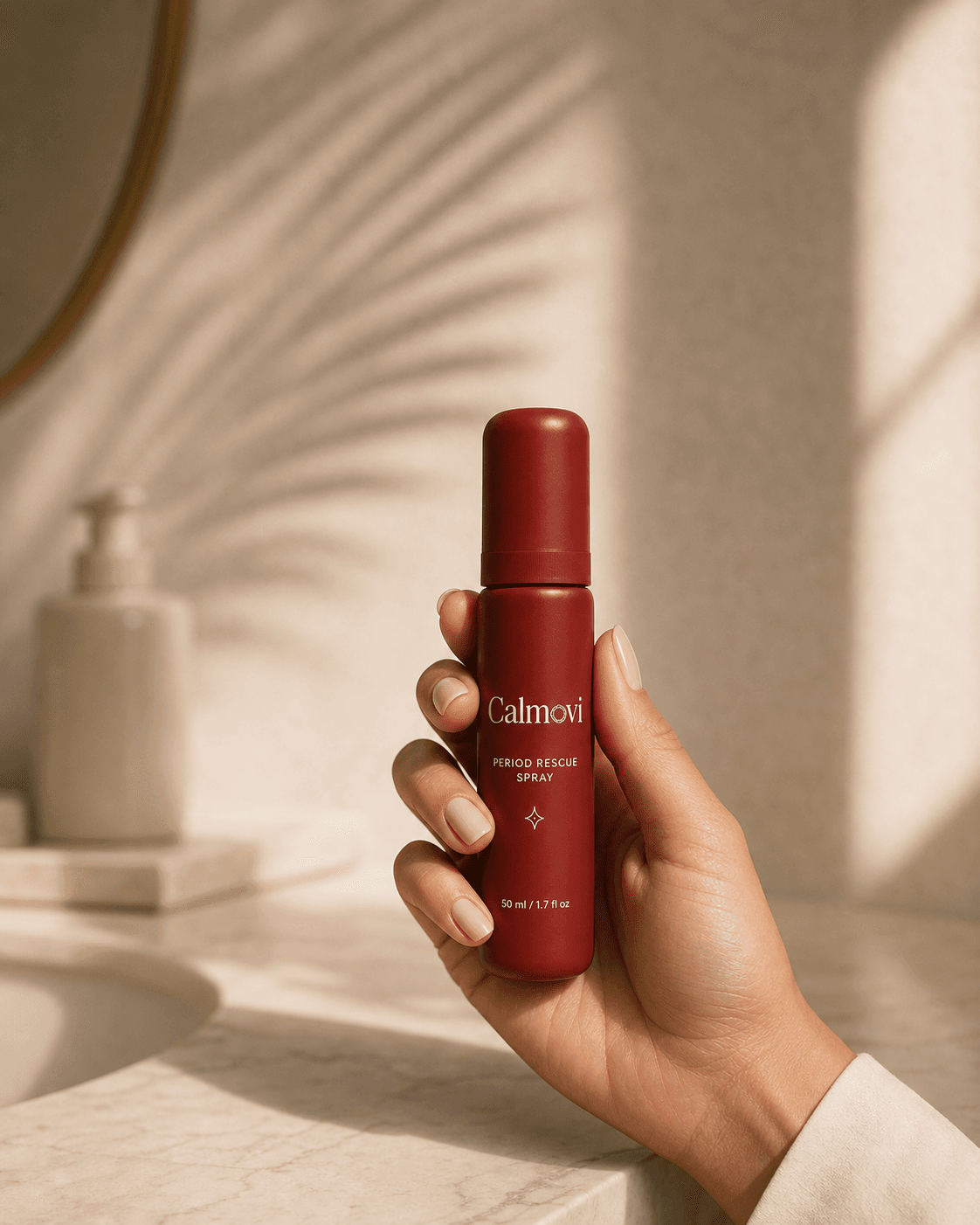
- A waterproof, wipe-clean pouch for damp or stained underwear
- Any pain relief you already use safely, kept in labeled packaging
- One thin heat patch, if heat helps your cramps
- A small comfort item, such as a snack or electrolyte sachet
Build the kit around four moments, not a shopping list
Most period-kit checklists start with products and keep adding. That creates inventory, not readiness.
A better question is: what would need to happen between noticing a leak and carrying on with your day?
The four moments your kit should handle
Protection
Stop the immediate problem with a menstrual product you already trust.
Treatment
Give a fresh stain a careful first response before it dries.
Containment
Give damp or stained underwear a discreet, waterproof place to go.
Recovery
Handle cleanup, cramps, and the small things that help you continue.
This sequence is the difference between carrying period products and carrying a period emergency kit.
1. Protection: pack what you will actually use
The best menstrual product for your kit is the one you already trust. That might be pads, tampons, liners, period underwear, a cup, or a disc. Preference matters, which is why a useful kit starts with your routine rather than somebody else's ideal list.
For an everyday pouch, two or three products are usually enough to bridge the time until you reach home or a place where you can restock. Match the absorbency to your normal flow and include a liner only if it is useful to you.
Do not make the emergency the first time you try a new product. Cups and discs have a learning curve. Tampons come with timing and absorbency instructions. Period underwear needs a plan for carrying it after a change.
2. Treatment: give a fresh stain a first response
A period leak is easier to manage when you can respond before the blood dries. That does not mean turning a public bathroom into a laundry room.
Your kit needs a first response, not a complete wash cycle.
Pack a small stain treatment that is designed for fabric and easy to control. Check the label before using it on color, silk, wool, or delicate blends. If cold water is available and practical, blot or rinse from the back of the fabric. Avoid heat and hard scrubbing.
Then stop. The goal away from home is to prevent the stain from setting and make the proper wash easier later.
3. Containment: plan for the underwear, not just the stain
This is the item most period kits forget.
Once you change, what happens to the stained underwear? A tissue does not contain moisture. A cosmetic pouch may absorb it. A loose plastic bag works once, but it is easy to forget and easy to tear.
A waterproof, wipe-clean pouch gives the garment a defined place until you can treat and wash it properly. It protects the rest of your bag and removes the need to improvise while you are already uncomfortable.
Keep clean products separate from the containment section. A two-pocket pouch works well. So does a smaller sealed wet bag inside the main kit.
4. Recovery: carry what helps you continue
Recovery is personal. For one person, it is a heat patch. For another, it is the pain relief they already use, a snack, or simply clean underwear and five quiet minutes.
Keep this section disciplined. A period kit should not become a portable medicine cabinet.
Severe or unusual pain, a major change in flow, fainting, fever, or symptoms that stop you from functioning deserve medical attention. A kit helps you manage an ordinary interruption. It is not a substitute for care.
Choose the pouch before you choose the extras
The pouch sets the limit. That is useful.
- Small enough to stay in the bag you use most
- Waterproof or easy to wipe clean
- Opaque enough to carry discreetly
- Easy to open with one hand
- Divided, or large enough to hold a separate wet compartment
- Durable enough to be refilled instead of forgotten
If everything does not fit, remove the least useful item. Do not solve the problem with a bigger pouch until you have tested the smaller kit in real life.
Adapt the kit to where it lives
The core four-part system stays the same. The quantities change.
| Location | What changes | Priority |
|---|---|---|
| Everyday handbag | Keep it to two or three products, clean underwear, treatment, containment, and one comfort item. | Small enough to carry every day |
| Work | Keep a larger refill supply in your desk and a smaller rescue pouch for the commute. | Enough coverage for a long shift |
| Travel | Pack for the journey plus delays and keep one change in your personal item. | Access even when checked luggage is delayed |
| School or first period | Use familiar products, clean underwear, tissues, and a discreet pouch. | Confidence without unfamiliar choices |
| Car | Rotate products frequently and follow storage limits for medication, wipes, and adhesives. | Avoid damage from heat |
What not to pack
More is not safer. Leave out anything that creates confusion, irritation, or false confidence.
- Scented intimate products that may irritate sensitive skin
- Unlabeled pills or medication you have never used
- A new menstrual product you have not practiced with
- Loose liquids that can leak through the rest of the bag
- Harsh cleaning chemicals or mixed stain treatments
- Food that melts, expires quickly, or attracts a mess
- So many extras that the pouch stops coming with you
The two-minute monthly reset
A kit only works if it is still ready when you reach for it. Once a month, open it and check five things:
Reset the kit after your period
Replace
Return every menstrual product or supply you used.
Check
Inspect medication and product expiry dates.
Seal
Make sure wipes and stain treatment are closed and have not leaked.
Clean
Wash or wipe the pouch according to its care instructions.
Return
Put the kit back in the bag, desk, or suitcase where it belongs.
Do this after your period rather than waiting for the next one. Two minutes closes the loop.
A ready-made Period Rescue system
You can build this kit yourself. The framework matters more than the label on the pouch.
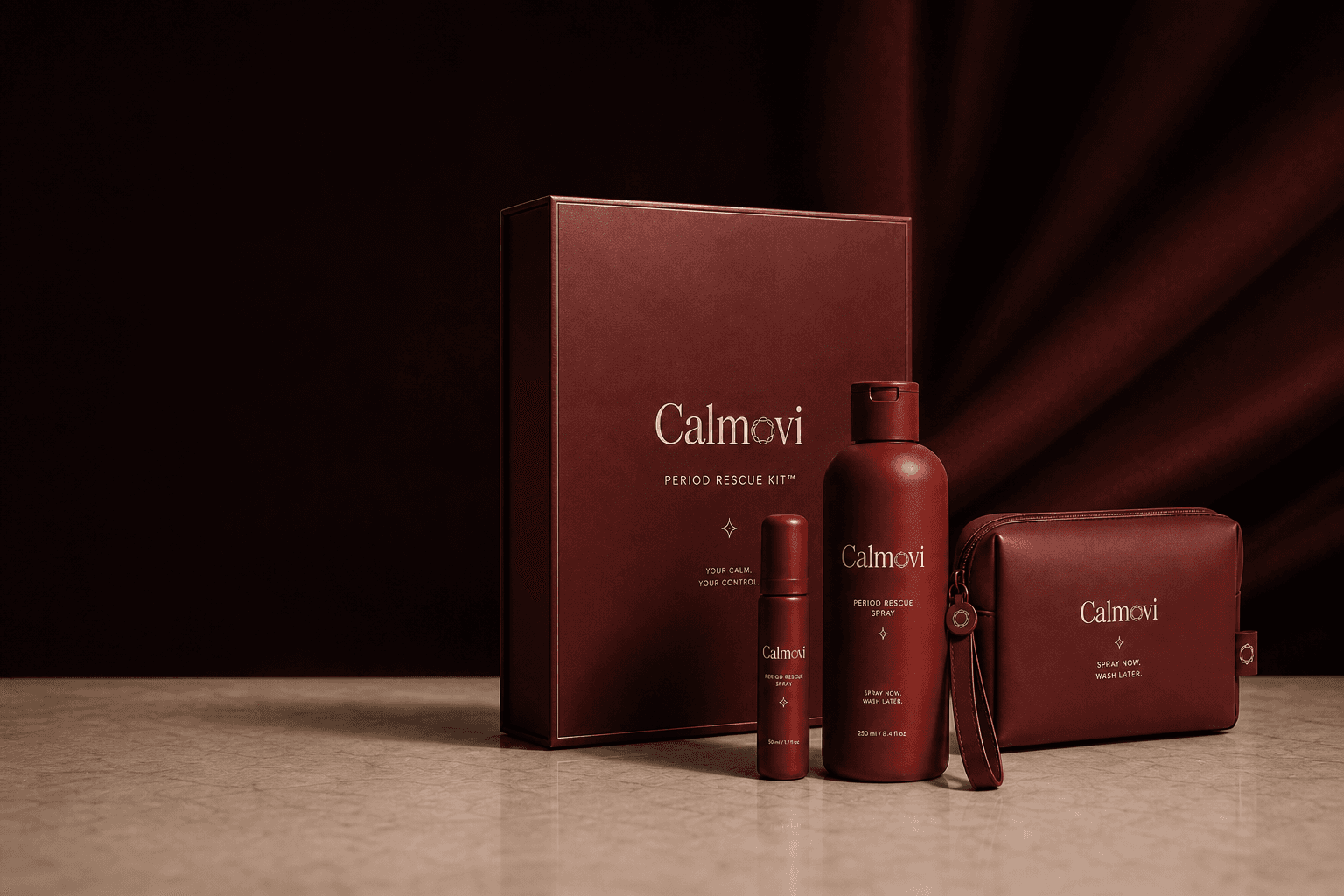
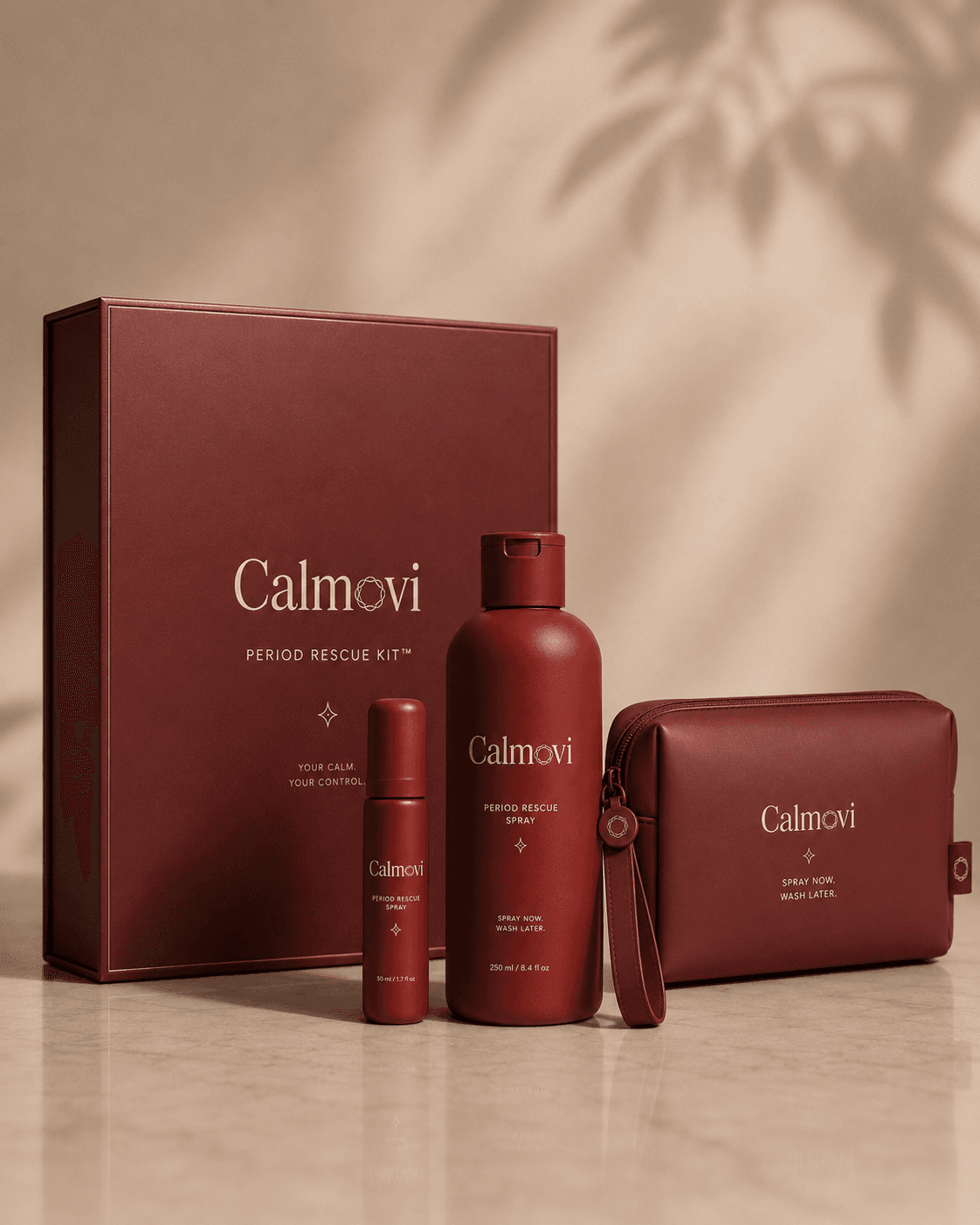
Calmovi's Period Rescue Kit is for the part most DIY kits leave unfinished: treatment and containment after a leak. It pairs a refillable 50 ml purse spray with a 250 ml home bottle and a waterproof pouch, so the response is already in order. Treat the stain. Contain the garment. Finish the wash at home.
The leak happened. The panic does not have to.
FAQ
Frequently asked questions
What should be in a period emergency kit?
Pack two or three menstrual products you already use, clean underwear, unscented wipes or tissues, hand sanitizer, a fabric-safe stain treatment, a waterproof containment pouch, and any pain relief or heat patch you already use safely.
How many pads or tampons should I keep in my bag?
For an everyday bridge-home kit, two or three products are a practical starting point. Pack more for long shifts, travel, or limited access to supplies. Follow each product's timing and use instructions.
Should I keep a period kit at work and in my handbag?
Yes, if that matches your routine. Keep a compact rescue kit in your handbag and a larger refill supply in your desk. Duplicating the essentials is more reliable than moving one pouch back and forth.
Can I put painkillers in a period kit?
Only carry medication that is appropriate for you. Keep it labeled, check the expiry date, follow the package directions, and consider storage conditions. Ask a pharmacist or clinician if you have health conditions, take other medication, or are unsure what is safe.
How often should I restock a period emergency kit?
Check it after each period or once a month. Replace used products, inspect expiry dates and seals, clean the pouch, and return it to its usual place.
What is the best bag for a period kit?
Choose a compact, opaque, waterproof or wipe-clean pouch. A divided pouch is especially useful because it keeps clean supplies separate from damp underwear or reusable products.
Sources
- Healthy Habits: Menstrual Hygiene — Centers for Disease Control and Prevention (accessed 2026-08-10)
- The Facts on Tampons and How to Use Them Safely — U.S. Food and Drug Administration (accessed 2026-08-10)
- Menstrual hygiene products — UNICEF (accessed 2026-08-10)
- What Is Period Flu? How Your Period Can Cause Flu-Like Symptoms — Cleveland Clinic (accessed 2026-08-10)
- How to Get Period Blood Out of Clothes Without Setting the Stain — Calmovi (accessed 2026-08-10)